Main index      India section         Search

30 years of
Naxalbari

An Epic of HEROIC Struggle and Sacrifice

[Click on graphics to see full size]

Naxalbari lives and will live. This is because it is based on
invincible Marxism-Leninism-Mao Tsetung Thought. We
know that as we move forward we shall face many obstacles,
many difficulties, many acts of betrayal and there will be many
setbacks. But Naxalbari will not die............

Comrade Charu Mazumdar


A VANGUARD PUBLICATION


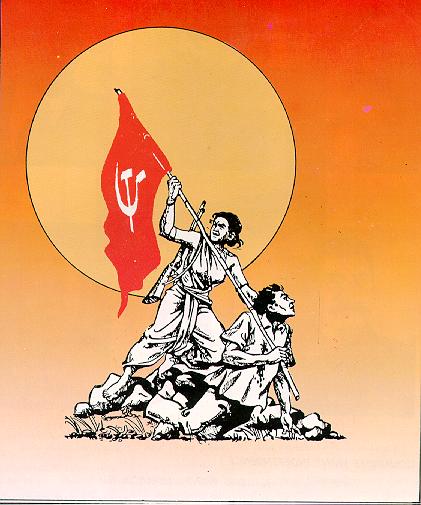
Taken over from the hands of one Martyr to another
The Red Flag dipped in Martyrs' blood
Shall Fly forever, forever!


CPI(ML) Founder Leader Comrade Charu Mazumdar

Portrait Gallery of Heroic Martyrs


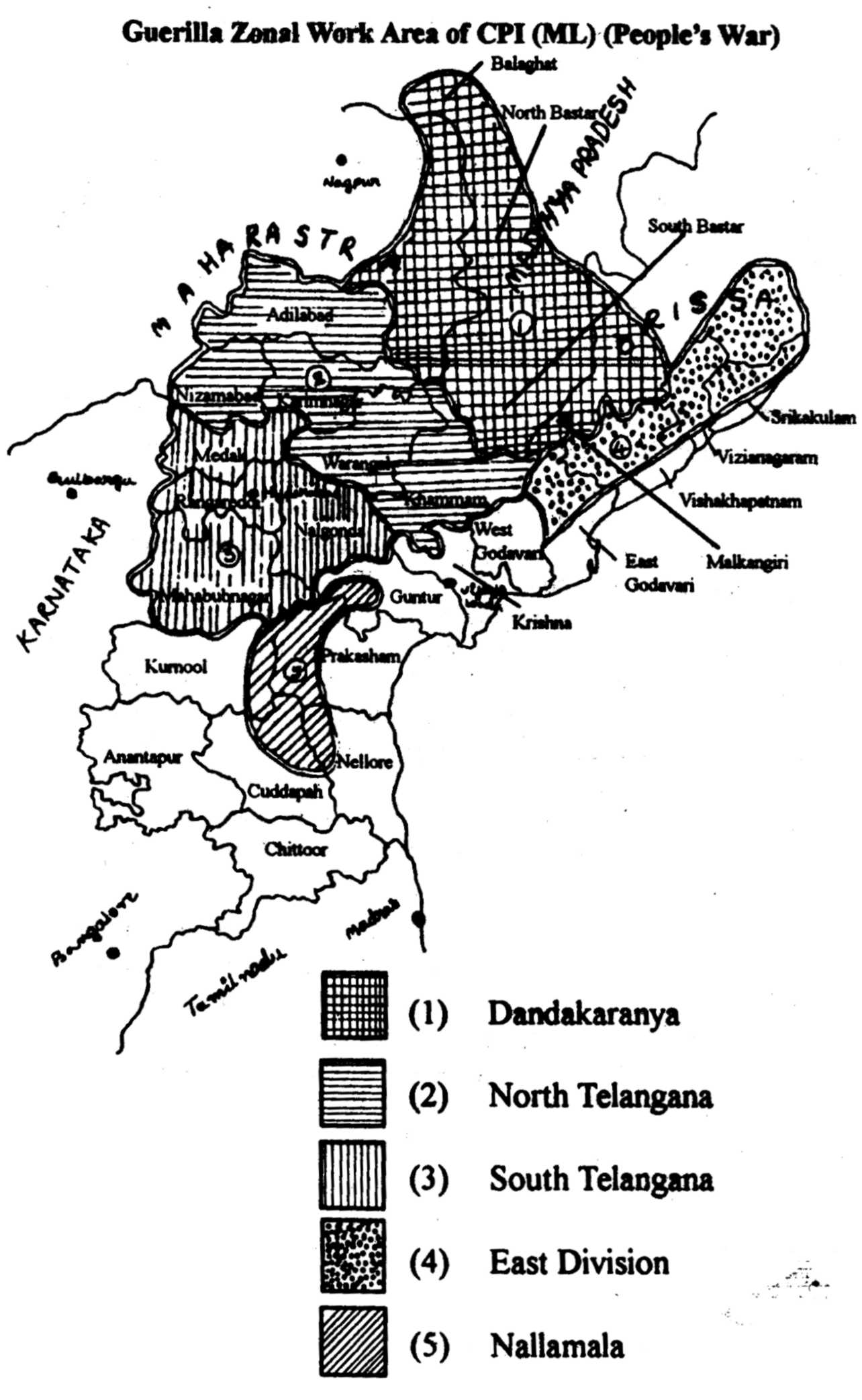
Map of guerilla zones (click to expand)


Gram Rakshak Dal (GRD) Members
undergoing training in
North Telangana Guerilla Zone


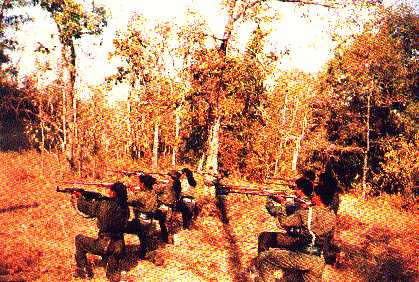
People's War Guerillas at a
Military Training Camp


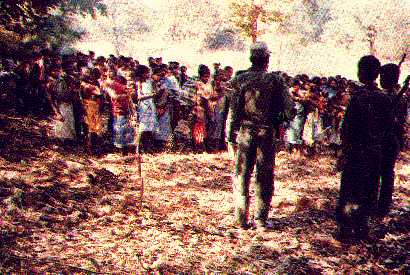
Adivasi Peasants listen to a
People's War Guerilla Dalam
in Dandakaranya Guerilla Zone


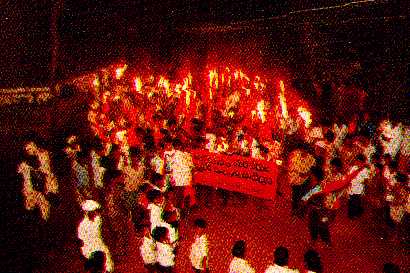
A Torch Light Rally on Martyrs' Day (July 28)


15th August 1947..... The Union Jack is lowered, the tri-colours unfurled. A hope is awakened. Independence, freedom and a better life is expected and promised by the new rulers. A great enthusiasm envelops the country. Time passes and so does Nehru, the first Prime minister of the country. Slogans of socialism, non-alignment of the Nehru era give way to Shastri's Jai Jawan, Jai Kisan and then Indira Gandhi's Garibi hatao. Now, twenty years have passed, a full two decades. The situation remains the same. The hopes are dashed, the expectations turn to frustration. The British are gone, but their capital remained, their laws remained, their colonial structures remained.... merely added was the parliamentary edifice. To British capital, was added American capital. While people continued to live in grinding poverty, the Tatas, Birlas of the country filled their coffers with enormous wealth. People's cries for justice were as ruthlessly suppressed, as in the British Raj. The slogans of the rulers remained as mere slogans, the reality seemed different. The people were now searching, seeking something genuine, seeking real answers. The people's frustrations was reflected in the results of the February 1967 general elections; when, for the first time, non-Congress governments were formed in eight states. And then in the spring of 1967, a new ray of hope, shattered the darkness engulfing the country. A fresh breeze from the East began to displace the stagnant, putrid air of the past twenty years. The veil of lies and deceit behind which our rulers took protection, was torn asunder. A clap of  thunder struck the remote village of Naxalbari in North Bengal, and its reverberations shook the conscience of the entire country.

18th March, 1967.... The red flag is hoisted. The peasant convention of the Siliguri sub-division is in session, at Naxalbari. Five hundred delegates, some armed with bows and arrows, chalk out a new path for their future. Revolutionary leaders explain the bankruptcy of the CPI (M) and the peaceful path to change. The Chinese revolution is given as an example of how the poor can seize political power in a backward semi-feudal country. The convention ends with a call for the immediate seizure of land and the setting up of liberated base areas. The peasants prepare for launching their offensive against the landlords of the area..

 

INDEX

PART-1: THE NAXALBARI UPRISING
The First Spark
Naxalbari Gets Recognition
The Naxalbari Path
Towards a New Party
The Prairie Fire
Naxalbari-type Upsurge
    (1) Srikakulam
    (2) Birbhum
    (3) Debra-Gopiballavpur
    (4) Mushahari
    (5) Lakhimpur-Kheri
Profile of a Leader

PART-2: THE SETBACK
The Government Onslaught
Martyrdom of CM
Movement Recedes
Three Trends Emerge

PART-3: INTROSPECTION
A Self-Critical Review
The Importance of Mao Ze Dong Thought

PART-4: REVOLUTION TAKES ROOT
Bihar:

        (1) Maoist Communist Centre
        (2) CPI (ML) Party Unity
Andhra Pradesh:
        (1) The Initial Regrouping
        (2) Telangana Regional Conference
        (3) A Cultural Resurgence
        (4) The Student Movement
        (5) Go to Village Campaign
        (6) Resurgence of the Peasant Movement
        (7) Civil Liberties Movement
        (8) Formation of CPI (ML) (PW)

PART-5: 1980-84 - FIRST STEP TOWARDS GUERILLA ZONE
Guerilla Zone Perspective
Movement's Extension
    (1) Dandakaranya
    (2) North Telangana

PART-6: 1985-89 - FIRST ROUND OF SUPPRESSION
War of Self Defence
Efforts to Maintain Mass Links
Party Consolidates and Retaliates
Peoples' Movement Regains Initiative

PART-7: 1990 - A BRIEF REPRIEVE

PART-8: 1991 TO 1995..... SECOND ROUND OF SUPPRESSION
Tasks in the New Conditions of Repression
Struggle Continues
Growing Armed Resistance

PART-9: POLITICAL CAMPAIGNS

PART-10: A GUERILLA ZONE IS BORN
Economic Gains
Political Authority of Peasant Committees
Social Transformation

PART-11: PARTY - THE LEADING FACTOR
Continuing the Legacy of Naxalbari

PART-12: INDIA'S BRIGHT FUTURE


Scanned and formatted by the Maoist Documentation Project

Main index      India section         Search